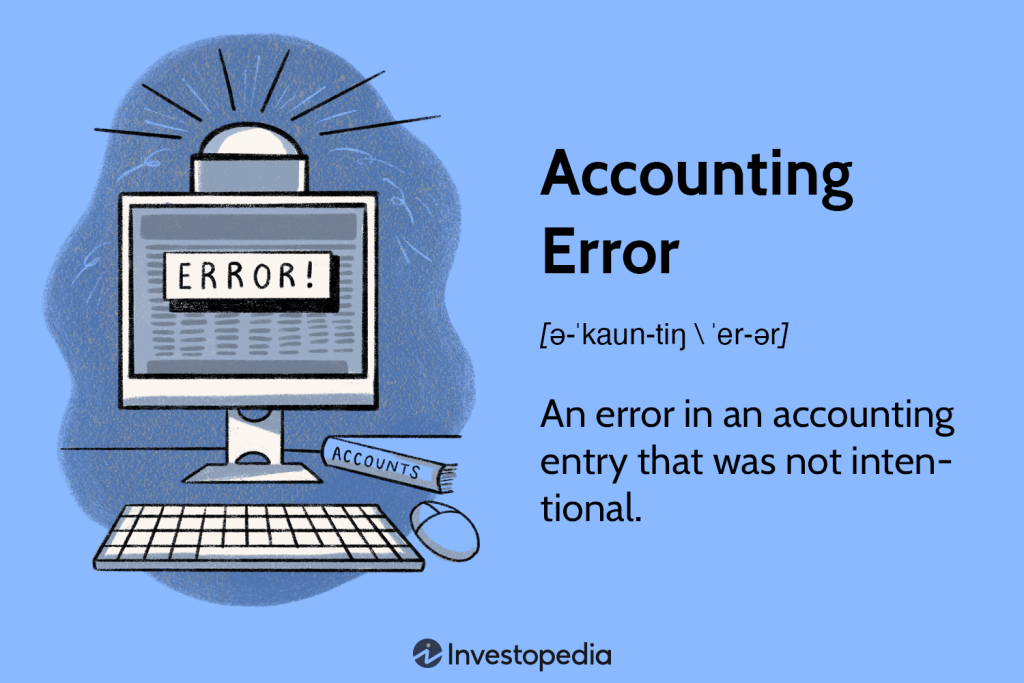
Accurate financial reporting is essential for every business, regardless of size or industry. Financial reports guide decision-making, support tax compliance, and provide a clear picture of business performance. However, even small errors in financial reports can lead to serious consequences, including incorrect forecasting, compliance issues, and poor financial decisions. Avoiding Errors in Financial Reports: A Bookkeeper’s Perspective
From a professional standpoint, avoiding errors in financial reports: a bookkeeper’s perspective involves a combination of structured processes, attention to detail, and the right tools. Bookkeepers play a crucial role in ensuring that financial data is accurate, complete, and reliable before it is used for reporting.
In this article, we explore how bookkeepers prevent errors in financial reports and maintain the integrity of financial data.
Why Accuracy in Financial Reports Matters
Financial reports are used by business owners, accountants, investors, and regulatory bodies. When errors occur, the impact can be significant:
- Misleading profit or loss figures
- Incorrect tax filings
- Cash flow mismanagement
- Poor budgeting decisions
- Loss of investor or lender confidence
Even minor discrepancies can grow into larger financial problems if not corrected early. This is why bookkeepers prioritise accuracy at every stage of the financial recording process.
Common Errors Found in Financial Reports
Before understanding how to avoid errors, it is important to identify where they typically occur. Common financial reporting errors include:
- Duplicate transactions
- Missing invoices or receipts
- Incorrect expense categorisation
- Data entry mistakes
- Unreconciled bank accounts
- Misclassification of assets and liabilities
- Timing errors in accrual accounting
Bookkeepers are trained to identify and prevent these issues before they affect financial reports.
How Bookkeepers Avoid Errors in Financial Reports
Professional bookkeepers follow strict procedures and best practices to minimise errors. Below are the key methods used from a bookkeeping perspective.
1. Accurate and Consistent Data Entry
One of the most common sources of errors in financial reports is incorrect data entry. Bookkeepers ensure that every transaction is recorded accurately and consistently.
This includes:
- Entering correct amounts
- Using the right dates
- Applying consistent formatting
- Recording transactions in the correct accounts
Even small mistakes in data entry can distort financial reports, so bookkeepers often double-check entries before finalising records.
2. Proper Use of Accounting Software
Modern bookkeeping relies heavily on accounting software such as Xero, QuickBooks, and MYOB. These tools reduce manual errors by automating many processes.
Bookkeepers use software to:
- Import bank transactions automatically
- Match payments with invoices
- Categorise expenses correctly
- Generate real-time financial reports
Automation reduces human error, but bookkeepers still review system outputs to ensure accuracy.
3. Regular Bank Reconciliation
Bank reconciliation is one of the most effective ways to avoid errors in financial reports.
Bookkeepers compare:
- Internal accounting records
- External bank statements
This process helps identify:
- Missing transactions
- Duplicate entries
- Incorrect amounts
- Unrecorded fees or charges
By reconciling accounts regularly—often monthly or weekly—bookkeepers ensure that financial records match actual bank activity.
4. Strong Document Management Practices
Every financial transaction must be supported by proper documentation. Bookkeepers maintain accurate records of:
- Receipts
- Invoices
- Contracts
- Bank statements
This ensures that all entries in financial reports are verifiable. Without proper documentation, errors are more likely to go unnoticed or unresolved.
Good document management also supports audits and compliance requirements.
5. Double-Entry Accounting System
The double-entry accounting system is a fundamental tool for preventing errors in financial reports.
Every transaction is recorded twice:
- A debit in one account
- A credit in another account
This system ensures that the accounting equation always remains balanced:
Assets = Liabilities + Equity
If the accounts do not balance, it signals an error that must be investigated. This built-in control helps bookkeepers detect mistakes early.
6. Regular Financial Reviews
Bookkeepers do not simply record transactions—they also review financial data regularly to ensure accuracy.
This includes:
- Checking ledger entries
- Reviewing account balances
- Verifying expense classifications
- Identifying unusual transactions
Regular reviews help catch small errors before they become larger reporting issues.
7. Accurate Expense Categorisation
Incorrect categorisation is a common cause of financial reporting errors. Bookkeepers ensure that every expense is assigned to the correct category.
For example:
- Office supplies are not misclassified as equipment
- Marketing expenses are not mixed with operational costs
- Capital purchases are not recorded as regular expenses
Proper categorisation ensures that financial reports accurately reflect business performance.
8. Managing Accruals and Timing Differences
Timing errors often occur when transactions are recorded in the wrong accounting period. Bookkeepers manage this through accrual accounting principles.
They ensure that:
- Revenue is recorded when earned, not when received
- Expenses are recorded when incurred, not when paid
They also track:
- Accrued expenses
- Deferred revenue
- Prepaid costs
This ensures financial reports reflect the correct financial period.
9. Use of Internal Controls
Internal controls are processes designed to reduce errors and fraud. Bookkeepers often implement or follow these controls, such as:
- Separation of duties
- Approval processes for large expenses
- Regular audits
- Restricted system access
These controls create multiple layers of verification, reducing the risk of mistakes in financial reports.
10. Ongoing Training and Professional Development
Accounting standards, tax regulations, and software tools are constantly evolving. Bookkeepers stay updated through:
- Professional training courses
- Industry updates
- Software certifications
- Accounting standards updates
This ensures they are aware of best practices and can avoid errors caused by outdated knowledge.
11. Attention to Detail and Routine Checking
Perhaps the most important skill in bookkeeping is attention to detail. Bookkeepers routinely:
- Cross-check figures
- Review reports line by line
- Investigate discrepancies
- Validate unusual transactions
This careful approach helps prevent small errors from being overlooked and ensures financial reports are reliable.
The Bookkeeper’s Role in Financial Accuracy
From a bookkeeper’s perspective, avoiding errors in financial reports is not a one-time task—it is an ongoing process. Every transaction, every entry, and every report must be carefully managed and reviewed.
Bookkeepers act as the first line of defence in financial accuracy. Their work ensures that accountants, business owners, and stakeholders can rely on financial reports without questioning their integrity.
Conclusion
Avoiding errors in financial reports: a bookkeeper’s perspective highlights the importance of structured processes, technology, and attention to detail in maintaining accurate financial data. Through consistent data entry, bank reconciliation, proper documentation, and regular reviews, bookkeepers significantly reduce the risk of financial reporting errors.
Accurate financial reports are essential for informed decision-making, compliance, and business growth. By following best practices and maintaining strong internal controls, bookkeepers help businesses operate with confidence and financial clarity.
In today’s data-driven business environment, the role of the bookkeeper is more important than ever in ensuring financial accuracy and stability.