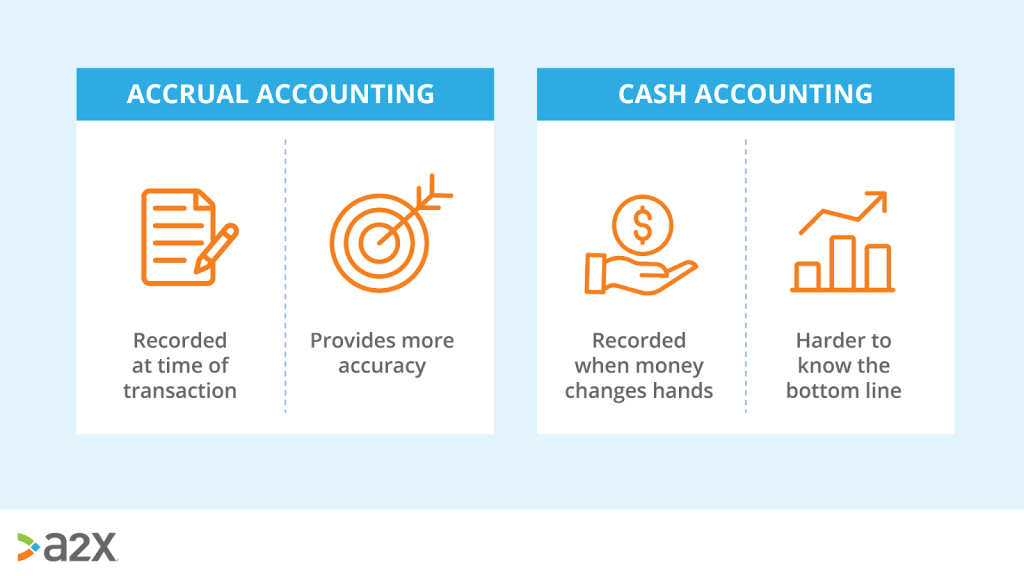
Bookkeeping is fundamental to managing a business’s finances, but not all bookkeeping methods are created equal. Two primary methods—accrual basis bookkeeping and cash basis bookkeeping—differ significantly in how and when transactions are recorded. Understanding these differences is essential for accurate financial management and tax reporting.
In this article, we’ll explore the definitions, advantages, disadvantages, and best uses of accrual vs. cash basis bookkeeping, helping you decide which method suits your business needs.
What is Cash Basis Bookkeeping?
Cash basis bookkeeping records revenues and expenses only when cash changes hands. Simply put, you record income when you receive payment and record expenses when you pay bills.
Key Features of Cash Basis Bookkeeping:
- Transactions are recorded based on actual cash flow.
- It is straightforward and easy to maintain.
- Ideal for small businesses with simple financial operations.
Example:
If you invoice a client in December but receive payment in January, the income is recorded in January under cash basis bookkeeping.
What is Accrual Basis Bookkeeping?
Accrual basis bookkeeping records revenues and expenses when they are earned or incurred, regardless of when cash is received or paid. This method matches income and expenses to the period they relate to, providing a more accurate picture of financial health.
Key Features of Accrual Basis Bookkeeping:
- Transactions are recorded when earned or incurred, not when cash is exchanged.
- Provides a realistic view of income and liabilities.
- Preferred by larger businesses and those seeking detailed financial insights.
Example:
Using the same scenario, if you invoice a client in December but receive payment in January, the income is recorded in December under accrual basis bookkeeping.
Differences Between Accrual and Cash Basis Bookkeeping
| Feature | Cash Basis Bookkeeping | Accrual Basis Bookkeeping |
|---|---|---|
| Timing of Recording | When cash is received or paid | When transaction occurs (earned/incurred) |
| Complexity | Simpler and easier to manage | More complex, requires tracking receivables and payables |
| Financial Accuracy | Less accurate for long-term financial health | More accurate, reflects true financial position |
| Tax Reporting | Allowed for small businesses with under certain revenue thresholds | Required for larger businesses and public companies |
| Matching Principle | Not followed | Follows matching principle of accounting |
| Cash Flow Visibility | Provides real-time cash flow info | Can obscure current cash position |
Pros and Cons of Cash Basis Bookkeeping
Pros:
- Easy to understand and implement.
- Requires less accounting knowledge.
- Focuses on actual cash flow, which is critical for small businesses with tight budgets.
- Lower bookkeeping costs.
Cons:
- Doesn’t provide a complete picture of liabilities and receivables.
- Can distort profitability if payments are delayed.
- Not compliant with Generally Accepted Accounting Principles (GAAP).
- May not be suitable for businesses with inventory.
Pros and Cons of Accrual Basis Bookkeeping
Pros:
- Provides a comprehensive view of financial health.
- Complies with GAAP and is often required by lenders and investors.
- Matches income and expenses to the correct period, aiding better decision-making.
- Useful for businesses with inventory or long-term contracts.
Cons:
- More complex and time-consuming.
- Requires tracking accounts receivable and payable.
- May not provide immediate insight into cash flow.
- Typically higher bookkeeping costs.
Which Bookkeeping Method Should You Choose?
Consider Cash Basis Bookkeeping If:
- You run a small business or freelance operation.
- Your transactions are primarily cash-based, with minimal credit sales.
- You want simple bookkeeping without complex accounting.
- Your business does not maintain inventory.
- Your revenue falls below IRS thresholds (in the U.S., typically under $25 million for certain businesses).
Consider Accrual Basis Bookkeeping If:
- Your business carries inventory or offers credit to customers.
- You want a detailed view of financial performance.
- You are planning to seek financing or investors.
- Your business revenue exceeds IRS thresholds.
- You want to comply with GAAP and generally accepted tax laws.
How Bookkeeping Software Handles Accrual vs. Cash Basis
Modern bookkeeping software like QuickBooks, Xero, and FreshBooks allow you to choose your accounting method and automatically generate reports accordingly. Many small business owners start with cash basis and switch to accrual as their business grows.
Impact on Tax Reporting and Compliance
The IRS in the United States allows most small businesses to use cash basis bookkeeping for tax reporting. However, businesses with inventory, corporations, or those with sales exceeding certain limits must use accrual basis.
Choosing the correct bookkeeping method affects your tax liability timing, deductions, and overall compliance. It’s advisable to consult a tax professional to understand what’s best for your business.
Transitioning from Cash to Accrual Basis Bookkeeping
Many businesses start with cash basis due to its simplicity but switch to accrual as they expand. Transitioning requires adjusting your books to recognize receivables and payables, which can be complex but provides a clearer financial picture.
Conclusion: Understanding Accrual vs. Cash Basis Bookkeeping for Business Success
Choosing between accrual and cash basis bookkeeping is a crucial decision that impacts your financial reporting, tax obligations, and business insights. Cash basis offers simplicity and real-time cash flow visibility, ideal for small or cash-focused businesses. Accrual basis provides accuracy and a complete financial picture, better suited for growing or complex businesses.
Evaluating your business size, transaction types, and reporting needs will guide you to the right bookkeeping method. When in doubt, seek advice from accounting professionals to ensure compliance and optimize your financial management.
FAQs About Accrual vs. Cash Basis Bookkeeping
Q: Can I switch between cash and accrual basis bookkeeping?
A: Yes, but it requires adjusting your financial records. Consult an accountant for a smooth transition.
Q: Which method is better for tax purposes?
A: It depends on your business size and IRS rules. Small businesses often benefit from cash basis, while larger businesses must use accrual.
Q: Does cash basis bookkeeping track accounts receivable?
A: No, cash basis records income only when payment is received.
Q: Is accrual bookkeeping more expensive?
A: Typically yes, because it requires more detailed tracking and often professional help.