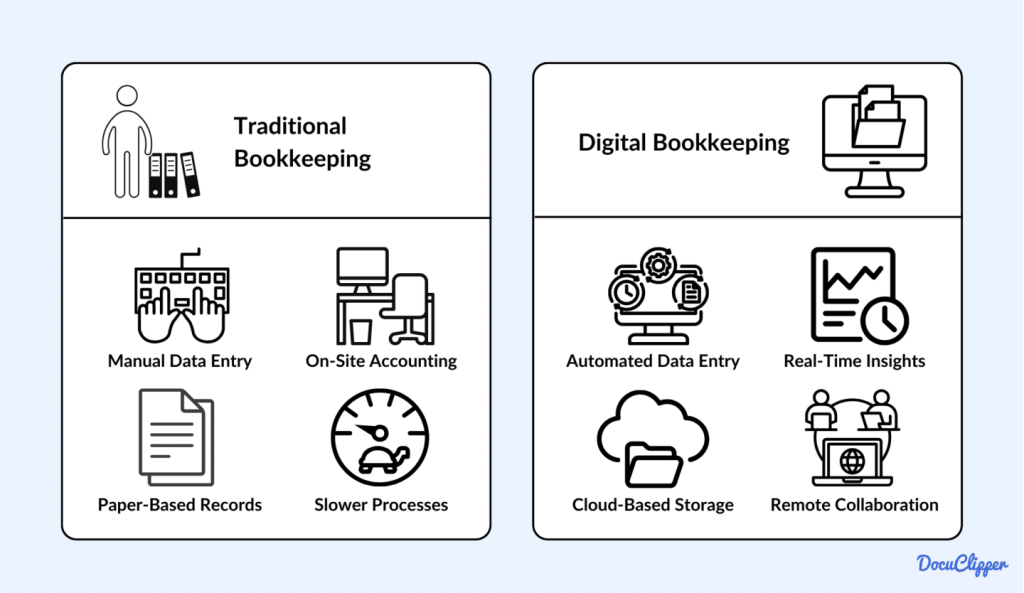
Digital transformation has reshaped nearly every aspect of modern business, and bookkeeping is no exception. Traditional manual methods of recording transactions are rapidly being replaced by advanced digital systems that improve speed, efficiency, and accuracy. Digital Bookkeeping: How Technology Improves Reporting Accuracy
Understanding digital bookkeeping: how technology improves reporting accuracy is essential for businesses that want reliable financial insights and better decision-making. Digital bookkeeping uses cloud platforms, automation tools, and integrated systems to ensure financial data is recorded correctly and reported in real time.
This article explores how technology enhances bookkeeping accuracy and why digital systems are now essential for financial reporting.
What Is Digital Bookkeeping?
Digital bookkeeping refers to the use of software, cloud-based systems, and automated tools to record, manage, and report financial transactions electronically.
Instead of relying on paper records or manual spreadsheets, digital bookkeeping allows bookkeepers to:
- Record transactions in real time
- Automate data entry and categorisation
- Generate financial reports instantly
- Store financial data securely in the cloud
This approach reduces human error and improves the overall accuracy of financial reporting.
Why Reporting Accuracy Matters in Bookkeeping
Accurate financial reporting is critical for every business. It ensures that financial statements reflect the true position of the company.
Reliable reports help businesses:
- Track profitability
- Manage cash flow
- Meet tax obligations
- Plan budgets effectively
- Attract investors and lenders
Inaccurate reports, on the other hand, can lead to financial mismanagement, compliance issues, and poor decision-making.
This is why improving accuracy through digital bookkeeping is so important.
1. Automation Reduces Human Error
One of the biggest advantages of digital bookkeeping is automation. Manual data entry is one of the most common causes of financial errors, but automation significantly reduces this risk.
Digital systems can automatically:
- Import bank transactions
- Categorise income and expenses
- Match invoices with payments
- Generate financial summaries
By reducing manual input, automation improves the accuracy and consistency of financial data.
Bookkeepers still review transactions, but automation handles repetitive tasks more efficiently and accurately.
2. Real-Time Data Processing Improves Accuracy
Traditional bookkeeping often involves delays in recording transactions, which can lead to outdated or incomplete reports.
Digital bookkeeping systems process data in real time, meaning:
- Transactions are recorded instantly
- Financial reports are always up to date
- Errors are identified sooner
- Business owners have immediate access to financial insights
Real-time processing ensures that financial reports reflect the most current information, improving accuracy and reliability.
3. Cloud-Based Systems Enhance Data Integrity
Cloud accounting platforms such as Xero, QuickBooks, and MYOB are central to digital bookkeeping.
These systems improve reporting accuracy by:
- Storing data securely in real time
- Reducing the risk of data loss
- Allowing multiple users to access the same information
- Automatically updating financial records
Cloud systems also reduce version control issues, ensuring everyone works with the same accurate data set.
4. Smart Categorisation of Transactions
Digital bookkeeping systems use intelligent categorisation features that help assign transactions to the correct accounts.
For example:
- Recurring supplier payments are automatically classified
- Regular income sources are recognised and categorised
- Utility bills are grouped correctly each month
This reduces the risk of misclassification, which is a common cause of reporting errors.
Bookkeepers can also create rules that improve categorisation accuracy over time.
5. Bank Feeds Improve Transaction Accuracy
Bank feeds are a key feature of digital bookkeeping systems. They allow financial transactions to be automatically imported from bank accounts into accounting software.
This improves accuracy by:
- Eliminating manual data entry
- Ensuring all transactions are recorded
- Reducing the risk of missing or duplicate entries
- Providing up-to-date financial records
Bookkeepers review and reconcile these transactions to ensure accuracy, but automation significantly reduces the workload.
6. Automated Reconciliation Ensures Consistency
Bank reconciliation is essential for verifying financial data, and digital tools have made this process much more efficient.
Automated reconciliation systems:
- Match transactions with bank statements
- Highlight discrepancies
- Suggest possible matches
- Reduce manual checking time
This ensures that financial records align with actual bank activity, improving overall reporting accuracy.
7. Integration Between Business Systems
Modern digital bookkeeping systems integrate with other business tools such as:
- Point-of-sale systems
- E-commerce platforms
- Payroll systems
- Customer relationship management (CRM) software
These integrations ensure that financial data flows automatically between systems without manual input.
This reduces duplication and improves the consistency and accuracy of financial records.
8. Error Detection and Alerts
Digital bookkeeping software often includes built-in error detection features.
These systems can:
- Flag unusual transactions
- Detect duplicate entries
- Identify missing data
- Alert users to inconsistencies
Early detection helps bookkeepers correct errors before they affect financial reports, improving overall data reliability.
9. Standardised Reporting Formats
Digital bookkeeping systems use standardised reporting templates, which improve consistency across financial reports.
These include:
- Profit and loss statements
- Balance sheets
- Cash flow reports
- Expense summaries
Standardisation ensures that reports are structured correctly and comply with accounting standards, reducing the risk of formatting errors.
10. Improved Audit Trails and Transparency
Digital bookkeeping creates detailed audit trails that track every financial transaction.
This includes:
- Who entered or modified data
- When changes were made
- What was changed
Audit trails improve transparency and make it easier to identify and correct errors. They also support compliance during financial audits.
11. Enhanced Security Reduces Data Errors
Security is a major advantage of digital bookkeeping systems. Cloud platforms use:
- Encryption
- Secure backups
- User access controls
These features protect financial data from loss, corruption, or unauthorised changes, ensuring reporting accuracy is maintained.
12. Role of Bookkeepers in Digital Bookkeeping
Even with advanced technology, bookkeepers remain essential. Their role has evolved from manual data entry to financial oversight and analysis.
Bookkeepers now focus on:
- Reviewing automated entries for accuracy
- Managing software rules and settings
- Analysing financial reports
- Ensuring compliance with regulations
- Advising business owners on financial decisions
Technology enhances their efficiency, but professional judgement is still critical for accurate reporting.
Benefits of Digital Bookkeeping for Reporting Accuracy
Businesses that adopt digital bookkeeping benefit from:
- Fewer manual errors
- Faster financial reporting
- Improved data consistency
- Better compliance with regulations
- Real-time financial insights
These advantages make financial management more efficient and reliable.
Challenges of Digital Bookkeeping
While digital bookkeeping offers many benefits, it also presents challenges:
- Learning curve for new software
- Dependence on internet connectivity
- Risk of incorrect automation settings
- Ongoing subscription costs
Proper setup and training are essential to ensure systems work effectively and accurately.
Conclusion
Digital bookkeeping: how technology improves reporting accuracy highlights how modern tools have transformed financial management. Automation, cloud systems, real-time data processing, and integration between platforms all contribute to more accurate and reliable financial reporting.
While technology reduces manual work and improves efficiency, bookkeepers remain essential for oversight, interpretation, and ensuring compliance.
In today’s business environment, digital bookkeeping is no longer optional—it is a critical component of accurate financial reporting and long-term business success.