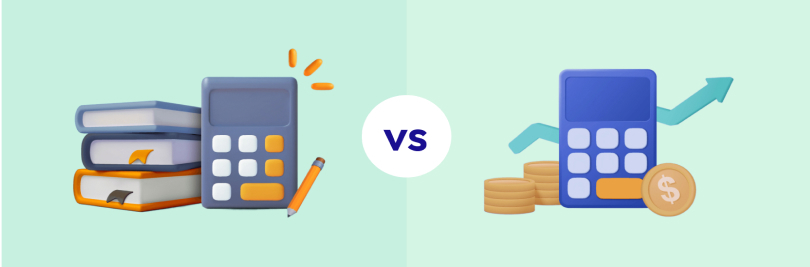
If you own a small business, you may wonder, do small businesses need both a bookkeeper and an accountant? While both professionals work with your business finances, they have different responsibilities. A bookkeeper generally manages your day-to-day financial records, while an accountant can provide financial analysis, tax support and strategic advice. Do Small Businesses Need Both a Bookkeeper and an Accountant?
For some small businesses, hiring both a bookkeeper and an accountant can provide valuable financial support. For others, a bookkeeper or accountant alone may be enough. The right choice depends on your business size, financial complexity, budget and long-term goals.
Understanding the difference between bookkeeping and accounting can help you decide which services your small business needs.
What Does a Bookkeeper Do for a Small Business?
A bookkeeper focuses on recording and organising your business’s financial transactions. Their role is to keep your financial records accurate, complete and up to date.
Day-to-day bookkeeping can involve recording sales, expenses, invoices and payments. A bookkeeper may also reconcile bank accounts and track money owed to and by the business.
Common bookkeeping tasks include:
- Recording income and expenses
- Reconciling bank and credit card accounts
- Managing accounts payable and receivable
- Processing invoices
- Categorising financial transactions
- Maintaining financial records
- Assisting with payroll records
- Preparing regular financial reports
Good bookkeeping gives business owners a clear view of their financial activity. It can also make tax preparation and financial reporting easier because the necessary records are organised throughout the year.
What Does an Accountant Do for a Small Business?
An accountant generally works with financial information at a broader level. Rather than simply recording transactions, an accountant can analyse financial data and help business owners understand their financial position.
Depending on their qualifications and services, accountants may assist with tax matters, financial reporting, budgeting, forecasting and business planning.
Common accounting services can include:
- Preparing financial statements
- Tax preparation and advice
- Financial analysis
- Budgeting and forecasting
- Profitability analysis
- Business planning
- Compliance support
- Advice on financial decisions
An accountant can use the financial information maintained by a bookkeeper to provide a more detailed understanding of business performance.
What Is the Difference Between a Bookkeeper and an Accountant?
The simplest way to understand the difference is to think about recording versus analysing.
Bookkeeping involves recording and organising financial transactions. Accounting involves reviewing, interpreting and using that financial information for reporting, tax and decision-making.
For example, a bookkeeper might record a $2,000 business expense and reconcile the transaction against the company’s bank account.
An accountant may then review that expense as part of the business’s overall financial performance and consider how expenses are affecting profitability or other financial reporting requirements.
Although there can be some overlap between the two roles, they are not identical.
Do Small Businesses Really Need Both?
Not every small business needs both a bookkeeper and an accountant. However, many businesses can benefit from having access to both.
A bookkeeper can take care of routine financial administration, allowing the business owner to spend less time entering transactions, reconciling accounts and managing invoices.
An accountant can focus on more complex financial matters, such as tax, reporting, forecasting and financial strategy.
Using both professionals can therefore create a system where each person focuses on their area of expertise.
However, a very small business with relatively simple finances may not need ongoing support from both. In some cases, the owner may manage basic bookkeeping themselves and engage an accountant when required.
When Should a Small Business Hire a Bookkeeper?
A bookkeeper can be particularly valuable when financial administration starts taking too much time.
You may want to consider hiring a bookkeeper if:
- Your business has a growing number of transactions.
- Your financial records are falling behind.
- You struggle to reconcile your bank accounts.
- You spend too much time processing invoices.
- You want more accurate financial records.
- You need regular financial reports.
- You want to focus more time on running your business.
Outsourcing bookkeeping can help keep your records organised throughout the year rather than leaving everything until tax time.
When Should a Small Business Hire an Accountant?
An accountant can become especially valuable when your business needs professional financial advice or has more complex financial requirements.
You may benefit from an accountant if you need help with tax returns, financial statements, budgeting, forecasting or business planning.
An accountant may also be useful when your business is undergoing significant changes. Expanding your operations, purchasing assets, changing business structures or planning for growth can all create financial considerations that may require professional advice.
The specific services available will depend on the accountant’s qualifications, experience and professional credentials.
Benefits of Having Both a Bookkeeper and an Accountant
There are several advantages to using both a bookkeeper and an accountant.
More Accurate Financial Records
A dedicated bookkeeper can regularly maintain your financial records. Keeping transactions organised and reconciled can reduce the risk of missing or incorrectly recorded information.
Less Administrative Work
Bookkeeping can be time-consuming. Outsourcing these tasks allows business owners to focus on customers, employees, operations and growth.
Better Financial Decision-Making
An accountant can analyse accurate financial records and provide insights that help business owners understand profitability, cash flow and financial performance.
Easier Tax Preparation
When financial records are maintained throughout the year, an accountant has better information available when preparing tax-related documents and reports.
Support for Business Growth
As a business grows, its financial requirements can become more complicated. Having both professionals involved can provide ongoing support as the business evolves.
Can One Person Do Both Bookkeeping and Accounting?
In some cases, one professional may offer both bookkeeping and accounting services. This can be convenient for small businesses that prefer to work with one provider.
However, it is important to understand exactly which services are included. A professional who provides bookkeeping may not necessarily offer every accounting or tax service your business requires.
Qualifications and professional requirements can also vary depending on the type of service being provided and your location.
Before hiring a financial professional, ask about their qualifications, experience and the specific services they are authorised and equipped to provide.
How Much Does a Bookkeeper and Accountant Cost?
The cost of bookkeeping and accounting services varies depending on factors such as the size of your business, transaction volume, financial complexity and the services you require.
Bookkeeping is often charged on a monthly, hourly or package basis, while accounting services may be charged according to the work involved.
Rather than choosing a provider based solely on price, consider the value the service provides. Saving several hours of administrative work each month or receiving useful financial advice can make professional support worthwhile.
How to Choose the Right Financial Support
Before hiring a bookkeeper or accountant, consider what your business actually needs.
Start by reviewing your current financial processes. Are your books accurate and up to date? Do you understand your cash flow and profitability? Are you confident handling your tax obligations?
If your main issue is financial administration, a bookkeeper may be the best place to start.
If you need tax assistance, financial analysis or strategic advice, an accountant may be more appropriate.
If your business is growing or becoming more financially complex, working with both may provide the most comprehensive support.
Final Thoughts
So, do small businesses need both a bookkeeper and an accountant? Not necessarily, but many small businesses can benefit from having access to both.
A bookkeeper can manage the day-to-day financial records that form the foundation of your business finances. An accountant can then use that information to provide financial analysis, tax support, reporting and strategic advice.
For a very small business with simple finances, one professional or occasional accounting support may be sufficient. As your business grows, however, having both a bookkeeper and an accountant can save time, improve financial visibility and support better decision-making.
The key is to assess your business’s current needs and choose financial professionals whose skills and services match your goals. Accurate bookkeeping and professional accounting can work together to give your small business a stronger financial foundation.