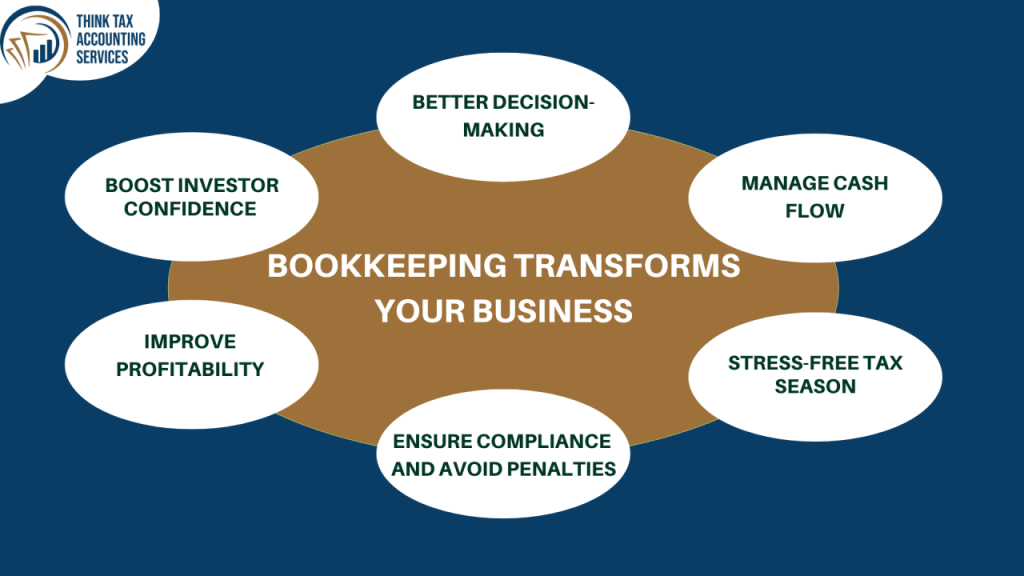
Running a business involves inherent risks—from cash flow shortages to regulatory compliance, fraud, and financial mismanagement. One of the most effective ways to mitigate these risks is through good bookkeeping. Accurate and organized financial records are more than just a compliance requirement—they are a strategic tool that protects your business and supports sustainable growth. How Good Bookkeeping Reduces Business Risk
In this article, we’ll explore how good bookkeeping reduces business risk, the key practices involved, and why every business should prioritize financial recordkeeping as part of its risk management strategy.
What Is Good Bookkeeping?
Good bookkeeping is the consistent and accurate recording, organization, and analysis of all financial transactions in a business. It includes:
- Tracking income and expenses
- Reconciling bank accounts
- Maintaining invoices and receipts
- Preparing financial statements
- Monitoring cash flow and budgets
Unlike basic bookkeeping, which may simply record transactions, good bookkeeping focuses on accuracy, compliance, and actionable insights. It provides a clear picture of a business’s financial health, which is essential for managing risk.
1. Preventing Cash Flow Problems
Cash flow issues are one of the leading causes of business failure. Even profitable companies can fail if they cannot meet short-term financial obligations.
Good bookkeeping reduces this risk by:
- Tracking income and expenses in real-time
- Identifying late payments from clients
- Forecasting upcoming costs
- Highlighting seasonal fluctuations in revenue
By regularly reviewing cash flow statements, business owners can plan ahead, ensure they have sufficient liquidity, and avoid costly overdrafts or unpaid bills. Accurate bookkeeping ensures that financial decisions are based on facts rather than assumptions.
2. Ensuring Regulatory Compliance
Businesses are subject to various local, state, and federal regulations, including tax laws, labor laws, and financial reporting requirements. Non-compliance can result in fines, legal penalties, or even business closure.
Good bookkeeping helps reduce regulatory risk by:
- Maintaining accurate records of income, expenses, and payroll
- Keeping track of tax obligations and deadlines
- Organizing receipts, invoices, and supporting documentation
- Providing ready-to-submit reports for audits
With organized financial records, businesses can demonstrate compliance at any time, minimizing the risk of penalties and legal issues.
3. Reducing the Risk of Fraud
Small and medium-sized businesses are often vulnerable to internal and external fraud. DIY or disorganized bookkeeping increases this risk.
Good bookkeeping reduces fraud risk by:
- Implementing internal controls and segregation of duties
- Reconciling bank accounts regularly
- Monitoring unusual transactions
- Maintaining a clear audit trail
Using cloud-based accounting software such as QuickBooks, Xero, or FreshBooks can further enhance security by providing real-time access, automated alerts, and tamper-proof records.
4. Supporting Informed Decision-Making
Business risk often arises when decisions are made without sufficient financial insight. Expansion, hiring, marketing investments, and inventory purchases all carry risk if financial data is incomplete or inaccurate.
Good bookkeeping supports better decision-making by:
- Providing accurate financial statements
- Highlighting profit margins and cost trends
- Tracking key performance indicators (KPIs)
- Offering historical data for forecasting
When business owners understand their financial position, they can make strategic decisions that minimize risk and maximize return on investment.
5. Enhancing Investor and Lender Confidence
Securing funding is essential for business growth, but investors and lenders want financial transparency. Poor bookkeeping raises red flags and increases perceived risk.
Good bookkeeping reduces this risk by:
- Providing accurate income statements, balance sheets, and cash flow statements
- Demonstrating consistent revenue and expense tracking
- Ensuring timely tax filings and regulatory compliance
Businesses with well-maintained records are more likely to secure loans, attract investors, and negotiate favorable terms. Transparency in financial management lowers perceived business risk and fosters trust.
6. Enabling Risk-Based Planning
Risk is not always negative—it can also represent opportunity. Good bookkeeping allows businesses to engage in risk-based planning, where decisions are made after assessing financial implications.
Bookkeeping enables businesses to:
- Identify underperforming products or services
- Analyze the cost-effectiveness of marketing campaigns
- Evaluate the financial feasibility of expansion
- Plan for emergencies and economic downturns
By integrating financial data into strategic planning, businesses can anticipate challenges and reduce exposure to unforeseen risks.
7. Avoiding Penalties and Litigation
Businesses that fail to maintain accurate records risk penalties, late fees, or even lawsuits. For example:
- Payroll discrepancies can lead to labor disputes
- Late tax filings may trigger fines
- Inaccurate invoicing could result in legal disputes with clients or suppliers
Good bookkeeping provides organized, verifiable records that protect your business from these risks. It also ensures that disputes can be resolved efficiently with supporting documentation.
Best Practices for Risk-Reducing Bookkeeping
To maximize the risk-reducing benefits of bookkeeping, businesses should follow these best practices:
1. Maintain Daily or Weekly Records
Regular transaction entry ensures accuracy and prevents backlog.
2. Reconcile Accounts Monthly
Bank and credit card reconciliations help detect errors and prevent fraud.
3. Separate Business and Personal Finances
Dedicated accounts reduce errors and protect personal assets.
4. Implement Internal Controls
Segregate duties and review transactions to prevent unauthorized activity.
5. Use Cloud Accounting Software
Automated tools improve accuracy, provide real-time insights, and enhance security.
6. Review Financial Statements Regularly
Monthly or quarterly reviews enable proactive risk management.
7. Work with Professionals
Certified bookkeepers or accountants can provide expert guidance, ensure compliance, and offer strategic financial advice.
Leveraging Technology for Risk Management
Modern bookkeeping tools make it easier to reduce business risk:
- Automated transaction tracking prevents human error
- Real-time dashboards provide instant financial visibility
- Audit trails make detecting fraud simple
- Integration with payroll, banking, and tax systems ensures compliance
By combining good bookkeeping practices with technology, businesses gain greater control and reduce exposure to financial and operational risks.
The Long-Term Benefits of Good Bookkeeping
Businesses that invest in good bookkeeping enjoy long-term advantages, including:
- Financial stability and predictability
- Lower risk of fraud and errors
- Compliance with regulations
- Improved decision-making and strategic planning
- Increased confidence from investors and lenders
Good bookkeeping is more than a back-office function—it’s a key component of risk management that safeguards the future of your business.
Conclusion: Good Bookkeeping as a Risk Management Tool
Every business faces risks, but good bookkeeping provides a framework to manage them effectively. From cash flow monitoring and fraud prevention to compliance and strategic decision-making, accurate financial records reduce exposure to threats and improve resilience.
Investing in professional bookkeeping or implementing robust internal financial systems is not just about compliance—it’s about protecting your business, ensuring stability, and enabling sustainable growth.
By prioritizing good bookkeeping, businesses turn financial recordkeeping into a powerful tool for risk reduction and long-term success. How Good Bookkeeping Reduces Business Risk