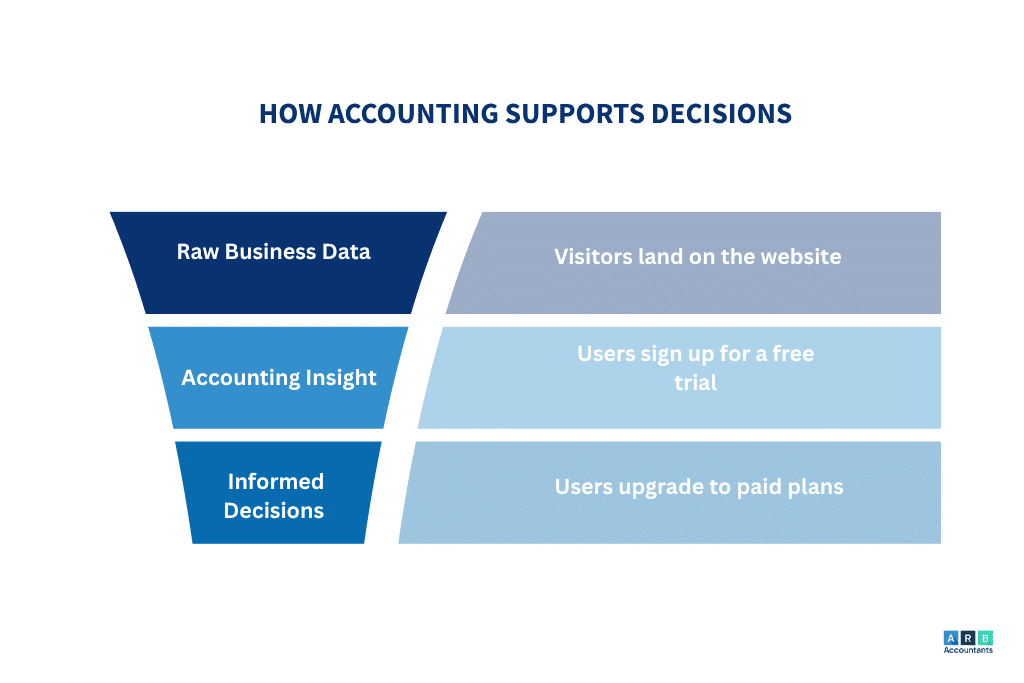
Making the right business decisions is challenging, especially when financial data is complex or unclear. Many business owners rely on instinct or incomplete information, which can lead to costly mistakes. This is where management accounts come in. How Management Accounts Help You Make Better Business Decisions
Management accounts provide regular, tailored financial insights that help business owners and managers make informed decisions. They go beyond basic bookkeeping and bank balances, offering a clear picture of profitability, cash flow, and overall business performance.
In this guide, we’ll explore how management accounts help you make better business decisions, what they include, and how to use them effectively.
What Are Management Accounts?
Management accounts are internal financial reports prepared regularly—usually monthly or quarterly—to monitor and improve business performance. Unlike statutory accounts prepared for tax purposes, management accounts are focused on decision-making.
They provide actionable information such as:
- Revenue and profit trends
- Expense breakdowns
- Cash flow position
- Performance against budget or forecast
The main goal is to give business owners the insights needed to make smarter, timely decisions.
Why Management Accounts Are Critical for Decision-Making
Without management accounts, decisions are often based on guesswork or incomplete information. This can lead to:
- Overspending
- Missed growth opportunities
- Cash flow problems
- Declining profitability
Management accounts help by:
- Providing timely insights – Monthly or quarterly reports show the current financial health of your business.
- Highlighting trends – Comparing performance over time helps identify areas of growth or concern.
- Focusing on what matters – You can prioritise critical financial metrics rather than getting lost in irrelevant detail.
- Supporting strategic planning – They provide the data needed for budgeting, forecasting, and investment decisions.
Key Components of Management Accounts That Aid Decision-Making
Understanding what to include in your management accounts is essential for making informed decisions.
1. Profit and Loss Statement (P&L)
The P&L statement shows your revenue, expenses, and profit over a set period.
Why it helps:
- Shows which products or services are most profitable
- Highlights areas where costs are rising
- Supports pricing, marketing, and sales decisions
By reviewing your P&L regularly, you can adjust strategies to maximise profit and reduce unnecessary expenses.
2. Cash Flow Statement
Cash is vital for business survival. A cash flow statement tracks:
- Cash inflows (sales, investments)
- Cash outflows (expenses, debt repayments)
- Available cash balances
Why it helps:
- Ensures you can meet short-term obligations
- Helps plan for investments or hiring
- Identifies potential cash shortages early
Even profitable businesses can fail due to poor cash flow. Regular monitoring allows proactive decisions.
3. Balance Sheet
The balance sheet provides a snapshot of your financial position at a specific date, including:
- Assets (what you own)
- Liabilities (what you owe)
- Equity (owner’s share)
Why it helps:
- Shows your financial strength
- Informs decisions on loans or investments
- Highlights trends in debt and equity management
Understanding your balance sheet ensures your decisions are grounded in financial reality.
4. Key Performance Indicators (KPIs)
KPIs transform financial data into actionable metrics. Examples include:
- Gross profit margin
- Operating costs as a percentage of revenue
- Customer acquisition cost
- Recurring revenue growth
Why it helps:
- Quickly identifies trends and performance gaps
- Supports operational decisions like staffing or marketing
- Makes it easier to focus on metrics that drive results
The right KPIs simplify decision-making by showing what matters most.
How Management Accounts Influence Specific Business Decisions
Management accounts are not just numbers—they guide strategic and operational choices. Here’s how:
Pricing Decisions
By analysing P&L statements and gross profit margins, management accounts help you understand whether your prices are profitable and competitive.
Cost Management
Expenses can spiral out of control if not monitored. Management accounts show where costs are rising and allow timely interventions.
Investment Planning
Cash flow reports and balance sheets reveal how much capital is available for investment, such as new equipment, marketing campaigns, or expansion.
Hiring and Staffing
By tracking revenue, profit, and cash flow trends, management accounts help determine when it’s financially viable to hire new staff or increase wages.
Product or Service Decisions
Profitability reports for individual products or services show which areas to prioritise and which may need to be re-evaluated or discontinued.
How to Use Management Accounts Effectively
Creating management accounts is only part of the process. To make better business decisions, you must review and act on them consistently.
- Set a regular schedule – Review accounts monthly or quarterly.
- Compare results – Look at actual performance vs budget, forecast, or previous periods.
- Identify trends and anomalies – Spot positive trends to build on and negative trends to address.
- Involve your team – Share key insights with managers to inform departmental decisions.
- Make data-driven decisions – Use the insights to guide pricing, marketing, staffing, and investment strategies.
Regularly using management accounts ensures that your decisions are proactive rather than reactive.
Common Mistakes to Avoid
- Ignoring cash flow – Profit doesn’t always equal available cash.
- Overcomplicating reports – Too much detail can obscure important trends.
- Reviewing too late – Timely reports are more useful for decision-making.
- Tracking irrelevant KPIs – Focus on metrics that impact business outcomes.
- Failing to act – Reports are useless if you don’t use them to inform decisions.
By avoiding these mistakes, management accounts become a powerful tool for business growth.
Can Small Businesses Create Their Own Management Accounts?
Absolutely. Even if you’re not an accountant, small businesses can prepare management accounts using:
- Accounting software like Xero, QuickBooks, or Sage
- Simple spreadsheets or templates
- Bookkeeper or accountant support for verification
The key is accuracy, consistency, and clarity. Reliable management accounts make it easier to make confident, informed decisions.
Final Thoughts: Turning Numbers Into Decisions
Management accounts are more than just reports—they are decision-making tools. They provide the clarity, insight, and confidence needed to make strategic and operational choices.
By including:
- P&L statements
- Cash flow reports
- Balance sheets
- Relevant KPIs
…business owners can turn complex financial data into actionable insights that guide pricing, investment, staffing, and growth strategies.
When used consistently, management accounts transform financial numbers from passive information into active business intelligence, helping you make better decisions and grow your business sustainably.