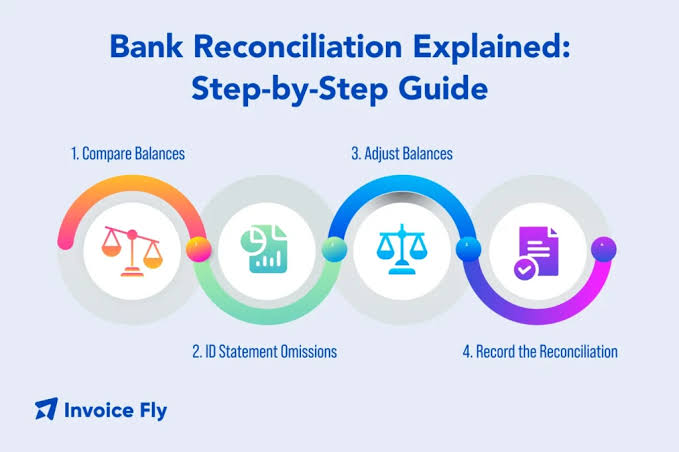
Bank reconciliation is an essential part of accurate bookkeeping and financial management. It involves comparing the transactions recorded in your accounting records with the transactions shown on your bank statement. By completing a regular bank reconciliation, you can identify errors, detect missing transactions, and ensure your financial records accurately reflect your business’s cash position. How to Reconcile Your Bank Account in 7 Simple Steps
If you have never completed a bank reconciliation before, the process may seem complicated. However, once you understand the basic steps, reconciling a bank account can become a straightforward part of your bookkeeping routine.
In this guide, we explain how to reconcile your bank account in seven simple steps.
What Is Bank Reconciliation?
Bank reconciliation is the process of comparing your business’s accounting records with your bank statement for the same period. The goal is to make sure the balance recorded in your bookkeeping system matches the balance reported by your bank after accounting for legitimate differences.
Differences can occur for several reasons. For example, a payment may have been recorded in your books but has not yet cleared the bank. Similarly, your bank may have charged a fee that has not yet been entered into your accounting records.
Regular bank reconciliation helps keep your books accurate and gives you a clearer understanding of your actual cash position.
Why Is Bank Reconciliation Important?
Bank reconciliation is more than an administrative bookkeeping task. It is an important financial control that can help businesses maintain accurate records.
Regular reconciliation can help you:
- Identify bookkeeping and data-entry errors
- Find missing or duplicated transactions
- Account for bank fees and interest
- Identify unauthorised or unusual transactions
- Keep financial statements accurate
- Monitor your business cash flow
- Prepare more reliable financial reports
- Make tax and year-end bookkeeping easier
For small businesses, performing a bank reconciliation regularly can also make it easier to identify financial issues before they become more difficult to correct.
7 Steps to Reconcile Your Bank Account
Step 1: Gather Your Bank Statement and Accounting Records
Start by collecting the documents and information you need. This usually includes your most recent bank statement and the corresponding records from your bookkeeping or accounting software.
Your bank statement will generally show the opening balance, deposits, withdrawals, fees, interest, and closing balance for a specific period.
Make sure you are comparing the same account and the same date range. Using mismatched periods can make the reconciliation unnecessarily confusing.
If your business has multiple bank accounts, reconcile each account separately.
Step 2: Compare the Opening Balances
Before checking individual transactions, compare the opening balance on your bank statement with the opening balance in your accounting records.
Ideally, these balances should agree. If they do not, there may be an issue with a previous reconciliation, an incorrectly entered transaction, or an adjustment that was not properly recorded.
Resolving opening balance differences first can make the rest of the bank reconciliation process much easier.
Step 3: Match Deposits and Income Transactions
Next, compare the deposits shown on your bank statement with the income and deposit transactions recorded in your books.
Look for matching dates and amounts. Depending on your business, deposits could include customer payments, cash deposits, transfers, refunds, or other income.
Mark transactions as reconciled as you confirm that they appear correctly in both records.
Pay particular attention to deposits that appear in your accounting system but are not yet shown on the bank statement. These could be legitimate outstanding deposits or timing differences rather than bookkeeping errors.
Step 4: Match Payments and Withdrawals
After checking deposits, compare payments and withdrawals.
Review transactions such as supplier payments, direct debits, electronic transfers, payroll payments, loan repayments, and other business expenses.
Check that the amount recorded in your bookkeeping system matches the amount that actually cleared your bank account.
If you find a transaction on the bank statement that is missing from your books, investigate it and record it appropriately. Avoid simply creating an adjustment without first determining what the transaction represents.
Step 5: Record Bank Fees, Interest, and Other Adjustments
Your bank statement may include transactions that were not previously entered into your accounting records.
Common examples include:
- Monthly bank fees
- Transaction charges
- Interest earned
- Loan interest
- Merchant fees
- Foreign exchange charges
- Other bank adjustments
Enter these transactions into your bookkeeping system using the appropriate accounts.
This step is important because even a small bank fee can cause your reconciliation to remain out of balance if it has not been recorded.
Step 6: Investigate and Correct Differences
After matching transactions, review anything that remains unreconciled.
Common bank reconciliation discrepancies include:
- Transactions entered with the wrong amount
- Duplicate transactions
- Missing transactions
- Incorrect transaction dates
- Unpresented or outstanding payments
- Deposits that have not yet cleared
- Bank fees that were not recorded
- Data-entry mistakes
- Unauthorised transactions
Do not automatically force the accounts to balance by entering an unexplained adjustment. Instead, investigate the difference and determine its cause.
If an error occurred in your bookkeeping, correct the original transaction where appropriate and retain supporting documentation.
Step 7: Confirm the Reconciled Balance
Once all relevant transactions have been reviewed and differences have been explained or corrected, confirm that your accounting records reconcile with the bank statement.
Your final reconciled balance should account for legitimate timing differences, such as outstanding payments or deposits that have not cleared.
If your accounting software provides a reconciliation report, review it and save the report with your bookkeeping records.
Keeping a consistent record of completed reconciliations can also make future reviews, financial reporting, and year-end accounting more efficient.
How Often Should You Reconcile Your Bank Account?
The ideal reconciliation frequency depends on the size and activity of your business. Many businesses reconcile their bank accounts monthly, while businesses with a high volume of transactions may benefit from reconciling more frequently.
Regular reconciliation makes it easier to identify errors while transactions are still recent and easier to investigate.
Waiting several months before reconciling can make it much harder to determine where a discrepancy originated.
Common Bank Reconciliation Mistakes to Avoid
One of the most common mistakes is assuming that a difference automatically means something is wrong. Timing differences are normal in bookkeeping. A payment may have been entered into your accounting system but may not have cleared the bank yet.
Another common mistake is failing to record bank charges or interest. These transactions can easily be overlooked because they may be automatically processed by the bank.
Businesses should also avoid using unexplained adjustments simply to make the reconciliation balance. Every adjustment should have a clear reason and appropriate supporting documentation.
Make Bank Reconciliation Part of Your Bookkeeping Routine
Learning how to reconcile your bank account is an important bookkeeping skill for any business owner. By following these seven steps—gathering your records, checking opening balances, matching deposits, matching payments, recording adjustments, investigating differences, and confirming the final balance—you can maintain more accurate financial records.
Regular bank reconciliation can provide greater visibility into your cash position, help identify bookkeeping errors, and support more reliable financial reporting.
Whether you reconcile your accounts manually or use accounting software, consistency is key. Make bank reconciliation a regular part of your bookkeeping process rather than a task that is only completed at tax time.