Many business owners feel confident running the day-to-day operations of their company but struggle when it comes to understanding the numbers. Financial reports can feel complex, technical, and disconnected from real-world decisions. This is where management accounts make a difference. Management Accounts Explained: From Zero to Useful
Management accounts turn raw financial data into clear, practical insights that help business owners understand performance, manage cash flow, and plan for growth. This guide explains management accounts from zero, breaking down what they are, what they include, and how to make them genuinely useful for your business.
What Are Management Accounts?
Management accounts are internal financial reports prepared regularly—typically monthly—to help business owners and managers monitor performance and make informed decisions. Unlike statutory financial accounts, management accounts are not designed for tax authorities or external reporting. They are created solely to support better business management.
They provide answers to essential questions such as:
- Is the business profitable?
- Where is money being earned or lost?
- Are costs under control?
- Is cash flow healthy?
Management accounts are flexible, customisable, and focused on what matters most to your business.
Why Management Accounts Matter
Without management accounts, many businesses rely on instinct, bank balances, or outdated financial statements. This can lead to poor decisions and unnecessary risk.
Management accounts matter because they:
- Provide real-time financial insight
- Highlight problems early
- Support better planning and forecasting
- Improve confidence in decision-making
They transform accounting from a compliance task into a practical business tool.
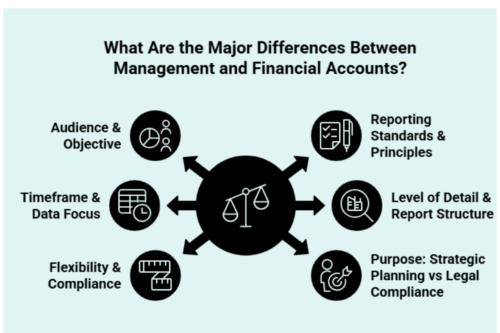
Management Accounts vs Financial Accounts
Understanding the difference between management accounts and financial accounts is key.
Financial accounts:
- Are prepared annually
- Focus on compliance and tax
- Follow strict accounting standards
- Look backwards at past performance
Management accounts:
- Are prepared monthly or quarterly
- Are tailored to your business
- Focus on current performance and future planning
- Are flexible in format and content
Financial accounts tell you what happened. Management accounts tell you what’s happening and what to do next.
What Do Management Accounts Include?
While management accounts can be customised, most include several core components.
Profit and Loss Statement (P&L)
The profit and loss statement shows revenue, expenses, and profit over a specific period. It helps business owners understand:
- Sales trends
- Cost control
- Profit margins
This report is often the starting point for understanding overall performance.
Balance Sheet
The balance sheet provides a snapshot of your business’s financial position at a point in time. It shows:
- Assets
- Liabilities
- Equity
It helps assess the financial strength and stability of the business.
Cash Flow Report
Cash flow reporting is critical. A business can be profitable but still struggle if cash is not available when needed.
Cash flow reports show:
- Cash coming in
- Cash going out
- Available cash balances
Management accounts help identify cash flow risks early.
Key Performance Indicators (KPIs)
KPIs highlight the metrics that matter most to your business. Examples include:
- Gross profit margin
- Operating cost percentages
- Debtor and creditor days
- Revenue growth
KPIs turn financial data into clear, actionable insights.
From Zero: Getting Started With Management Accounts
If you’re new to management accounts, the key is to keep things simple.
Step 1: Ensure Accurate Bookkeeping
Management accounts are only as good as the data behind them. Make sure:
- All income and expenses are recorded
- Bank accounts are reconciled
- Transactions are correctly categorised
Using accounting software can make this process easier and more reliable.
Step 2: Choose a Reporting Frequency
Most businesses prepare management accounts monthly. Monthly reporting provides timely insights without being overwhelming.
Smaller businesses may start with quarterly accounts, but monthly reporting is recommended as the business grows.
Making Management Accounts Useful
The goal of management accounts is not to produce reports, but to create useful information.
Focus on Trends, Not Just Numbers
One month’s results in isolation don’t tell the full story. Compare:
- Month-on-month performance
- Year-on-year results
- Actual results against budgets
Trends reveal what’s really happening in the business.
Keep Reports Relevant
Avoid overloading your management accounts with unnecessary detail. Focus on:
- Key income streams
- Major cost categories
- Metrics that influence decisions
Clear, concise reports are more likely to be reviewed and acted upon.
Using Management Accounts to Improve Decision-Making
Once management accounts are in place, they should actively support decisions such as:
- Pricing changes
- Cost reductions
- Hiring or staffing adjustments
- Investment planning
- Growth strategies
Regular review meetings—monthly or quarterly—help ensure management accounts lead to action rather than being ignored.
Common Mistakes That Reduce Their Value
Many businesses fail to get full value from management accounts due to common mistakes, including:
- Preparing reports too late
- Relying only on bank balances
- Ignoring cash flow
- Overcomplicating reports
- Not reviewing results regularly
Avoiding these mistakes makes management accounts far more effective.
Can You Prepare Management Accounts Yourself?
Yes, many business owners prepare management accounts using:
- Accounting software
- Spreadsheets
- Basic templates
However, understanding the numbers is just as important as producing them. Many businesses choose to work with a bookkeeper or accountant to ensure accuracy and clarity.
Professional support can help turn management accounts from confusing reports into valuable decision-making tools.
From Useful to Essential: Why Management Accounts Matter Long Term
As a business grows, decisions become more complex and the financial impact of mistakes increases. Management accounts provide:
- Greater control
- Better forecasting
- Increased confidence
- Improved profitability
They evolve from being useful to becoming essential.
Final Thoughts: Turning Management Accounts Into a Business Advantage
Management accounts don’t have to be intimidating. When explained simply and used correctly, they become one of the most powerful tools available to a business owner.
By moving from zero understanding to practical use, management accounts help you take control of your finances, reduce uncertainty, and make smarter decisions. They are not just about numbers—they are about running your business with clarity and confidence. Management Accounts Explained: From Zero to Useful