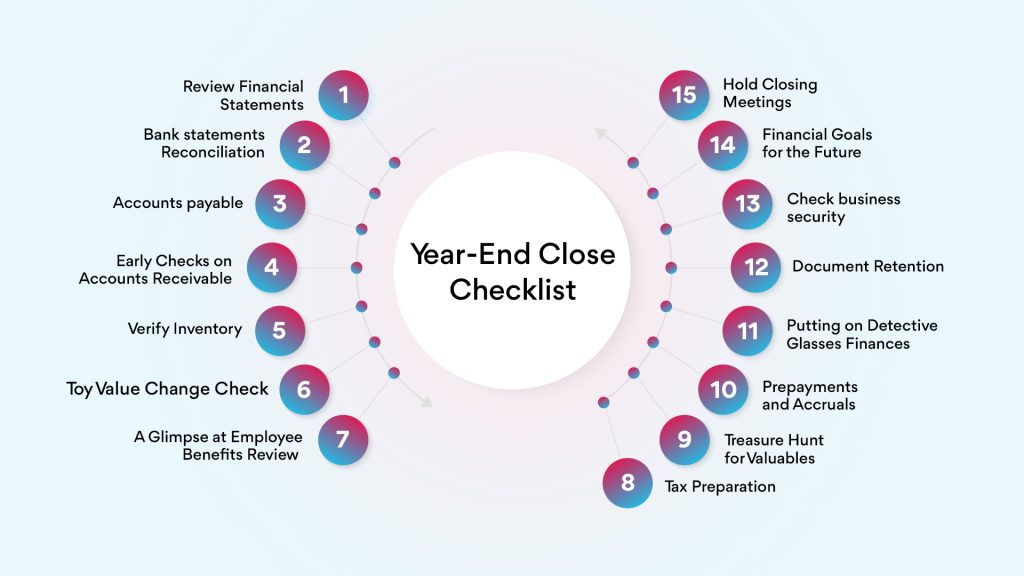
As the year draws to a close, businesses face the crucial task of preparing their year-end financials. Whether you’re a small business owner, accountant, or financial manager, having your records organized and ready can save time, reduce errors, and make tax season a breeze. This ultimate checklist will guide you through everything you need to prepare, ensuring your year-end accounting is accurate and stress-free. The Ultimate Checklist: What You Need Ready for Year-End Financials
Why Preparing Year-End Financials is Critical
Before diving into the checklist, it’s important to understand why year-end financial preparation matters.
- Accuracy in Reporting: Correct financial statements provide a clear picture of your business’s performance.
- Tax Compliance: Accurate records ensure you’re compliant with tax laws and can prevent costly penalties.
- Financial Decision-Making: Up-to-date data helps you make informed decisions for the next year.
- Audit Readiness: Organized records make audits smoother and faster, reducing stress.
Optimizing your workflow now prevents last-minute chaos and ensures your year-end accounting is thorough and precise.
The Ultimate Year-End Financial Checklist
Here’s a step-by-step guide to the key items every business should have ready for year-end financials.
1. Reconcile Your Bank Accounts
Start by reconciling all bank statements against your accounting records. This ensures that your financial statements accurately reflect your cash position.
- Compare each transaction in your bank account to your ledger.
- Investigate discrepancies immediately.
- Include all accounts, even petty cash and savings.
2. Review Accounts Receivable and Accounts Payable
Accurate tracking of what your business owes and what is owed to you is essential.
- Accounts Receivable (AR): Ensure all outstanding invoices are recorded and follow up on overdue payments.
- Accounts Payable (AP): Verify that all vendor bills and supplier invoices are accounted for.
- Adjust your records for any discrepancies to ensure your balance sheet is accurate.
3. Inventory Review and Valuation
For businesses with inventory, a year-end count is crucial.
- Conduct a physical inventory count to verify quantities.
- Adjust your accounting records to reflect any losses, damages, or obsolete items.
- Determine the value of inventory using consistent methods (FIFO, LIFO, or weighted average).
This step is important for both financial accuracy and tax reporting.
4. Fixed Assets and Depreciation
Ensure all fixed assets are accounted for and depreciation is properly recorded.
- Update your asset register with new purchases or disposals.
- Calculate depreciation accurately for each asset class.
- Review accumulated depreciation and ensure it’s correctly reflected in your financial statements.
Proper fixed asset tracking can reduce tax liabilities and improve financial transparency.
5. Review Payroll and Employee Records
Year-end financials should include a thorough review of payroll and related expenses.
- Reconcile payroll tax payments.
- Ensure employee benefits, bonuses, and reimbursements are accurately recorded.
- Prepare year-end payroll reports for compliance and taxation purposes.
Accurate payroll data is critical for both tax compliance and internal financial reporting.
6. Expense Categorization and Accruals
Properly categorize all expenses to ensure accurate profit and loss statements.
- Review all expense accounts and make necessary adjustments.
- Record accrued expenses, such as unpaid invoices or utilities.
- Identify prepaid expenses and allocate them correctly.
A clean expense record ensures that your financial statements reflect the true cost of operations.
7. Reconcile Credit Card and Loan Statements
Don’t forget to review credit card accounts and loans.
- Verify that all transactions are recorded correctly.
- Adjust for any outstanding balances or interest accrued.
- Ensure that loan payments and obligations are accurately reflected in your accounting system.
This step keeps your liabilities accurate and prevents surprises during financial reporting.
8. Prepare Financial Statements
Once your records are accurate, generate the key year-end financial statements:
- Balance Sheet – Snapshot of your assets, liabilities, and equity.
- Income Statement (Profit & Loss) – Summary of revenue and expenses.
- Cash Flow Statement – Tracks cash inflows and outflows.
These statements provide insight into your business’s financial health and are essential for tax filing, loans, and investors.
9. Tax Documents and Compliance
Ensure all tax-related documents are organized and ready:
- Sales tax records
- Payroll tax forms
- Deductible expense documentation
- Any supporting documentation for tax credits or deductions
Staying compliant now can save headaches during tax season and reduce the risk of audits.
10. Review Financial Reports with Your Accountant
Finally, schedule a review with your accountant or financial advisor.
- Verify accuracy of all statements and reconciliations.
- Discuss potential tax planning strategies.
- Plan for the upcoming year based on this year’s financial results.
A professional review ensures your year-end accounting is complete and your business is set up for success in the new year.
Tips for Streamlining Year-End Financial Preparation
- Start early: Don’t wait until December to begin.
- Use accounting software: Automate reconciliation and reporting tasks.
- Maintain organized records throughout the year: Saves time during year-end prep.
- Regularly review finances: Quarterly checks prevent last-minute surprises.
By following these tips, you can make the year-end process smoother and less stressful.
Conclusion
Preparing for year-end financials doesn’t have to be overwhelming. By following this ultimate checklist, you can ensure that your business records are accurate, tax-ready, and audit-proof. From bank reconciliations to payroll reviews and financial statements, each step plays a critical role in presenting a clear picture of your financial health.
Start early, stay organized, and make your year-end accounting a stress-free process. This preparation not only benefits compliance and reporting but also positions your business for a strong financial start to the new year. The Ultimate Checklist: What You Need Ready for Year-End Financials