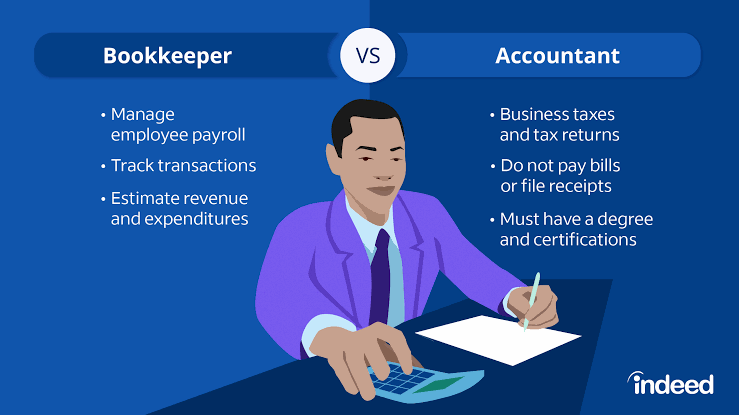
If you run a small business, keeping your financial records accurate and up to date is essential. However, many business owners are unsure whether they should hire a bookkeeper or an accountant. While both professionals work with business finances, their responsibilities are different.
So, when should you hire a bookkeeper instead of an accountant? In many cases, a bookkeeper is the right choice when your primary need is managing day-to-day financial records and transactions. An accountant may be more appropriate when you need tax assistance, financial analysis, reporting or strategic advice.
Understanding the difference between bookkeeping and accounting can help you choose the right financial support for your business.
What Is a Bookkeeper?
A bookkeeper is responsible for recording and organising a business’s financial transactions. Their job is to ensure that financial records are accurate, complete and up to date.
Bookkeepers commonly manage tasks such as recording sales and expenses, reconciling bank accounts, processing invoices and tracking accounts payable and receivable.
Depending on the services they offer, a bookkeeper may also assist with payroll records and prepare basic financial reports.
Typical bookkeeping tasks include:
- Recording business income and expenses
- Reconciling bank and credit card accounts
- Processing invoices
- Tracking payments
- Managing accounts payable and receivable
- Categorising transactions
- Maintaining financial records
- Preparing basic financial reports
Good bookkeeping gives a business owner reliable financial information and makes it easier to monitor business activity throughout the year.
What Is an Accountant?
An accountant generally works with financial information at a broader level. Accountants can analyse financial records, prepare reports and provide advice to help businesses make financial decisions.
Depending on their qualifications, registration and area of expertise, accountants may assist with tax matters, financial statements, budgeting, forecasting and business planning.
An accountant may provide services such as:
- Preparing financial statements
- Tax preparation and advice
- Financial analysis
- Budgeting and forecasting
- Business planning
- Profitability analysis
- Compliance support
- Financial advice
The key difference is that bookkeeping primarily focuses on recording financial information, while accounting often focuses on interpreting and using that information.
When Should You Hire a Bookkeeper Instead of an Accountant?
A bookkeeper may be the better choice when your business needs help with routine financial administration rather than complex financial advice.
If you are spending hours every week recording transactions, reconciling accounts or processing invoices, outsourcing these tasks to a bookkeeper can save you valuable time.
A bookkeeper can help ensure your financial records are maintained consistently, giving you a clearer picture of your business finances.
Here are some situations where hiring a bookkeeper may make sense.
1. Your Financial Records Are Falling Behind
One of the clearest signs you need a bookkeeper is when your financial records are consistently behind.
If transactions are not being recorded regularly, it can become difficult to know how much money your business is making or spending.
A bookkeeper can keep your accounts updated and organised, helping you maintain accurate financial information throughout the year.
2. You Spend Too Much Time on Bookkeeping
Business owners often start by handling their own bookkeeping. While this can work when a business is small, financial administration can become increasingly time-consuming as the business grows.
If you are spending evenings or weekends entering transactions, matching payments or reconciling accounts, it may be time to outsource your bookkeeping.
Hiring a bookkeeper allows you to spend more time focusing on customers, operations, employees and business growth.
3. You Need Regular Bank Reconciliations
Bank reconciliation involves comparing your business’s financial records with your bank statements to identify discrepancies and ensure transactions have been recorded correctly.
Regular reconciliation is an important part of maintaining accurate books.
A bookkeeper can handle this process on a regular basis, helping identify missing transactions, duplicate entries or other discrepancies.
4. You Have More Invoices and Payments to Manage
As your business grows, managing invoices and payments can become increasingly complicated.
A bookkeeper can help keep track of money owed to your business and payments your business needs to make.
This can improve organisation and give you greater visibility over your accounts receivable and accounts payable.
Having accurate records can also help you understand your cash flow and identify overdue payments.
5. You Want Better Financial Organisation
Even if your business is performing well, disorganised financial records can create unnecessary problems.
A bookkeeper can establish consistent processes for recording income, expenses and other transactions.
Better organisation can make it easier to access financial information when you need it and provide your accountant with accurate records when tax or reporting work is required.
6. You Need Basic Financial Reports
Depending on their services and qualifications, bookkeepers can often prepare basic financial reports for business owners.
These reports may help you monitor revenue, expenses and profitability.
Regular reports can give you a better understanding of what is happening financially rather than waiting until the end of the financial year.
If you need more detailed analysis or specialised financial reporting, an accountant may be more appropriate.
When Should You Hire an Accountant Instead?
While a bookkeeper can handle many important financial tasks, there are situations where an accountant may be the better choice.
You should consider working with an accountant when you need professional assistance with tax matters, detailed financial analysis, financial planning or complex business decisions.
For example, an accountant may be useful if you are planning to expand your business, restructure your operations, purchase significant assets or need help understanding your tax obligations.
The exact services an accountant can provide depend on their qualifications and professional credentials.
Can You Have Both a Bookkeeper and an Accountant?
Yes. In fact, many businesses use both professionals because their roles complement each other.
A bookkeeper can manage the day-to-day financial records, while an accountant can use those records for tax, reporting, analysis and financial advice.
For example, your bookkeeper might reconcile your accounts each month and maintain your transaction records. Your accountant can then review those records and use them to prepare financial reports or assist with tax matters.
This approach allows each professional to focus on their area of expertise.
Bookkeeper vs Accountant: Which One Do You Need?
Choosing between a bookkeeper and an accountant depends on your business’s current needs.
A bookkeeper may be the right choice if you need help with:
- Recording transactions
- Reconciling accounts
- Processing invoices
- Tracking payments
- Maintaining financial records
- Managing routine bookkeeping
An accountant may be more appropriate if you need:
- Tax assistance
- Detailed financial analysis
- Financial forecasting
- Business planning
- Complex financial reporting
- Strategic financial advice
If you need both types of support, you do not necessarily have to choose one over the other.
What Should You Look for in a Bookkeeper?
Before hiring a bookkeeper, consider their experience, qualifications, software knowledge and understanding of your industry.
Ask potential bookkeepers what services they provide and how often they will maintain your accounts.
It is also worth confirming how they communicate with your accountant if you use both professionals. Good communication can help ensure that financial information is accurate and available when needed.
Final Thoughts
So, when should you hire a bookkeeper instead of an accountant? A bookkeeper is often the right choice when your primary need is accurate, organised and up-to-date financial records.
If your business needs help recording transactions, reconciling bank accounts, managing invoices or maintaining accounts, a bookkeeper can take these tasks off your plate.
An accountant, on the other hand, can provide broader services such as tax assistance, financial analysis, reporting and business planning.
For many small businesses, the best solution is to use both. A bookkeeper can manage the day-to-day financial administration, while an accountant can provide professional advice and support with more complex financial matters.
The important thing is to assess your business’s specific needs. By choosing the right financial professional at the right time, you can keep your records organised, save valuable time and make better-informed business decisions.